
2027 AND THE DEFRAUDED NORTHERN POLITICAL OLIGARCHY
By W. D. Ahijoh
Northern Nigeria has historically occupied a dominant position in the political architecture of Nigeria. From the era of the Sardauna political doctrine to the military establishments that shaped post-independence governance, the North was once regarded not merely as a voting bloc but as the defining nucleus of national political power. However, beneath the surface of this long-standing influence lies a growing reality that many ordinary northerners are beginning to confront – the gradual defrauding of the Northern political establishment by its own oligarchic structure.
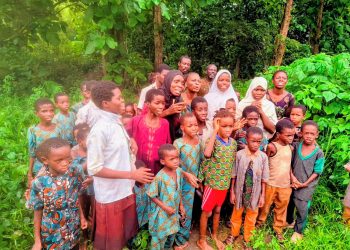
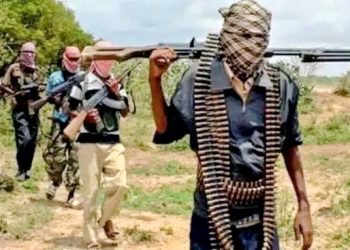
The North today stands at a dangerous political crossroads. Despite consistently producing large electoral numbers and serving as the decisive force in national elections, the region remains trapped in widespread poverty, insecurity, illiteracy, unemployment, infrastructural decay, and social dislocation. The paradox is painful: a region so politically powerful, yet economically and socially vulnerable. This contradiction raises a difficult but necessary question – who truly benefits from Northern political dominance?
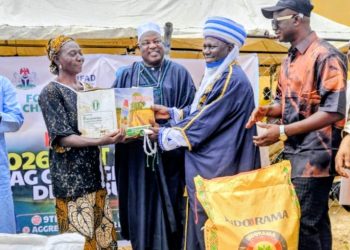
For decades, political power in the North has largely circulated within a tightly connected oligarchic class made up of political godfathers, entrenched elites, business allies, and power brokers who have mastered the art of emotional mobilization without corresponding developmental responsibility. They invoke religion, ethnicity, regional loyalty, and historical sentiments during elections, but governance outcomes rarely reflect the sacrifices of the ordinary people who sustain the system.
The tragedy of the Northern masses is not merely that they are poor; it is that they have repeatedly been used as instruments of political negotiation while remaining excluded from the benefits of power. Elections come and go, alliances shift, politicians defect from one party to another, yet the realities facing millions of northern youths remain unchanged. The political oligarchy continues to recycle itself while presenting every election as a battle for Northern interest, even when such interests are often personal, strategic, and economic rather than collective.
As 2027 approaches, the North may once again become the center of intense political calculations. Coalitions will emerge, alliances will collapse, and politicians will suddenly rediscover the language of Northern unity and regional protection. Yet the critical challenge before the region is whether the Northern electorate, especially the youth, will continue to surrender their future to political merchants who weaponize identity without delivering transformation.
The conversation about 2027 should therefore go beyond which candidate emerges or which party gains advantage. The deeper issue is whether the North is prepared to redefine leadership beyond inherited oligarchic structures. Can competence replace blind loyalty? Can development replace emotional manipulation? Can governance replace political entitlement?
The North possesses enormous human and economic potential. It has fertile agricultural land, strategic economic relevance, demographic strength, intellectual capacity, and cultural influence. But none of these can translate into progress where politics remains an exclusive enterprise controlled by a few powerful interests whose survival depends on preserving mass dependence and political ignorance.
Perhaps the greatest fraud against Northern Nigeria is not electoral defeat, marginalization, or opposition politics. It is the sustained culture of elite preservation that has normalized poverty amidst power and weakness amidst numerical strength. The ordinary northerner has defended political structures for decades without receiving equivalent protection from hunger, insecurity, unemployment, or hopelessness.
2027 must therefore become more than another election cycle. It must become a moment of political introspection for Northern Nigeria. A moment to ask difficult questions about leadership, accountability, c