
Cancer Day: Niger Records Rising Incidence of Breast, Cervical, and Prostate Cancers
Niger State Commissioner for Health, Dr. Multala Muhammad Bagana, has reported an increase in cancer cases in the state, rising from 59 cases in 2016 to 102 cases in 2022. The most prevalent types are breast, cervical, and prostate cancers.
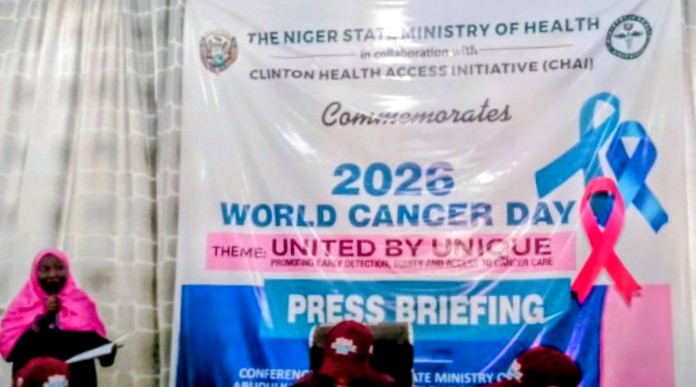
Dr. Bagana disclosed this information during a press briefing held on February 4th, 2026, to mark World Cancer Day 2026, with the theme: “United by Unique, Promoting Early Detection, Equity, and Access to Cancer Care.” The event took place at the Ministry’s conference hall.
According to the Commissioner, although Niger State currently lacks a population-based cancer registry, facility data indicates a troubling trend. He noted that the increase from 59 to 102 cases over six years highlights ongoing challenges such as low awareness, limited screening points, cultural barriers, and poor health-seeking behaviors.
The Commissioner affirmed that the state government’s response is substantive, not rhetorical. He highlighted the New Niger Health Agenda under Governor Muhammad Umaru Bago, which aims to reform the health system to prioritize prevention, early diagnosis, treatment, and improved service delivery across primary, secondary, and tertiary levels.
Dr. Bagana further explained that since 2022, efforts have been scaled up to include cervical cancer and HPV prevention services across various local councils, including Chanchaga, Paikoro, Suleja, Bosso, Gbako, Borgu, Kontagora, Lapai, and Mokwa. Over 2,000 women have been screened, with more than 300 treated using the screen and treat approach.
New VIA/VKIs services have been established in primary healthcare centers and hospitals, alongside the creation of a cervical cancer unit at Jummai Babangida Aliyu Maternal and Neonatal Hospital.
World Cancer Day 2026 was celebrated collaboratively by the Ministry of Health, Clinton Health Initiative (CHAI), and other partners.
“We have vaccinated 444,659 girls aged 9-14 years against HPV, which is a practical and effective prevention tool,” he stated.
Dr. Muhammad emphasized that progress against cancer relies on partnerships, acknowledging the continuous support from WHO, CHAI, the National Taskforce for Cervical Cancer Elimination, Raise Foundation, and other partners, with particular mention of CHAI.
He concluded by urging health workers, community leaders, partners, and citizens to invest in early detection, expand access to care, foster open dialogue about cancer, and promote screening initiative.