

Niger cassava processors turn to chips production after VCDP training
Priscilla Ben
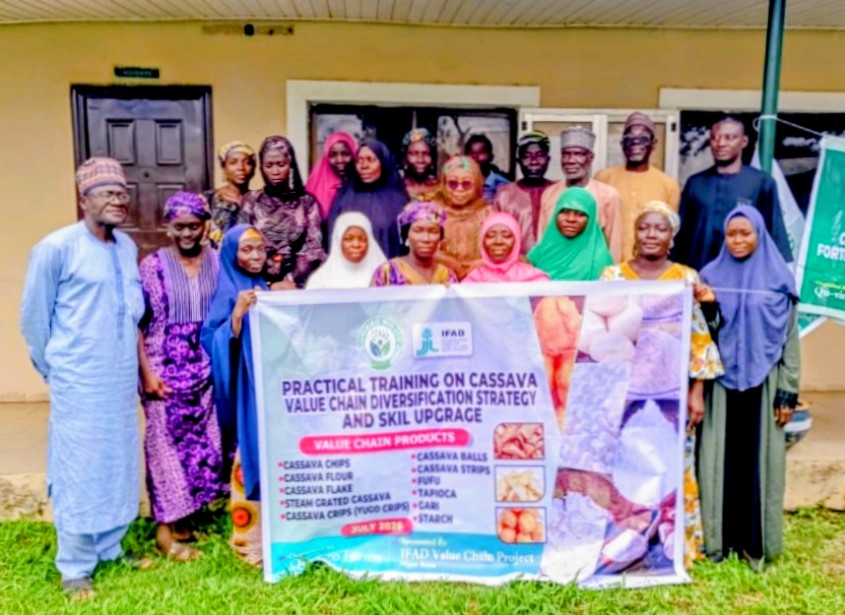
Cassava processors in Niger State have pledged to diversify into the production of cassava chips and other value-added products after a skills training introduced them to alternative uses of the crop beyond garri and flour.
The commitment followed a practical training on cassava value chain diversification organised by Qu-Viro Nigeria Limited in collaboration with the Federal Government/International Fund for Agricultural Development-Value Chain Development Programme (FG/IFAD-VCDP) in Minna.
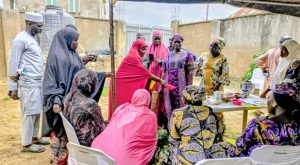
Several participants said the training exposed them to business opportunities they were previously unaware of and could help them expand their processing activities.
“I have learned that apart from garri, cassava flour and starch, I can make many other products from cassava and earn more money,” one of the beneficiaries, Mrs. Hannah Jiya, said.
Two other participants, Mercy Jiya and Ziliya Musa, said they discovered that different parts of the cassava plant, including the stems, roots and leaves, have economic value.
“We have gained a lot from this programme. We now know that the entire cassava plant is useful. We intend to start producing products such as cassava chips, cassava snacks and also share what we have learned with others,” they said.
Speaking at the event, Managing Director of Qu-Viro Nigeria Limited, Bello Salihu, said the training was designed to expose processors to additional cassava products, including chips.
According to him, his company manufactures cassava processing equipment and has buyers interested in cassava chips, making product diversification an option processors could explore.
He added that participants were trained on processing techniques and the operation of the equipment required to produce chips that meet buyers’ specifications.
Also speaking, the State Programme Coordinator of IFAD-VCDP, Hajiya Hadizat Isah, said the participants, drawn from nine cassava processing groups in Lavun Local Government Area, were selected to broaden their knowledge of cassava value addition.
She said the expectation was that the beneficiaries would transfer the skills acquired during the training to other processors in their communities.