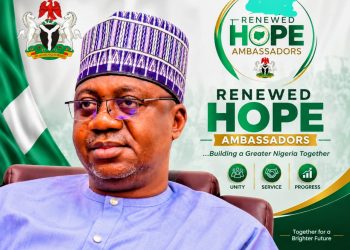
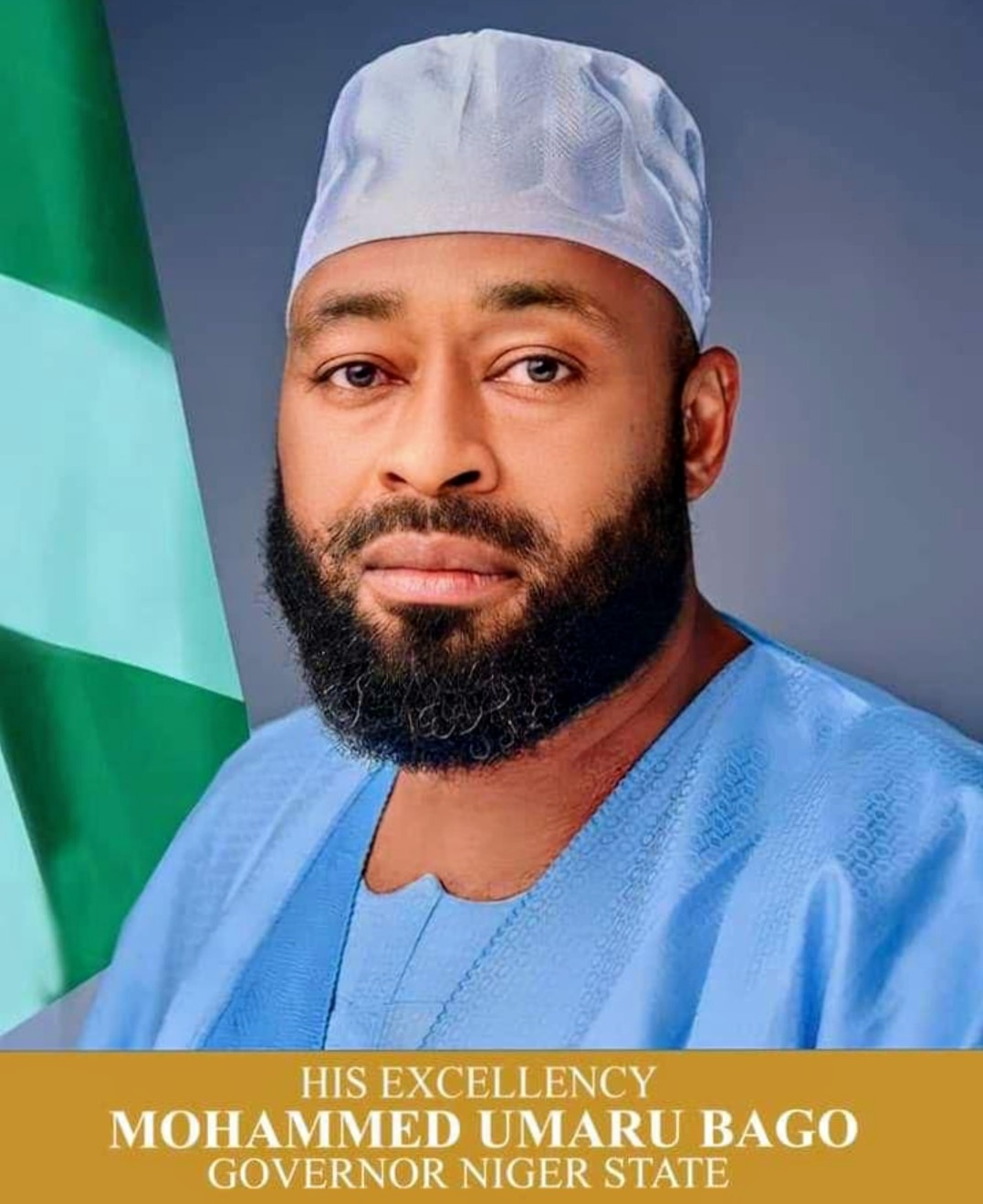

ANALYSIS on Governor Mohammed Umar Bago’s Three Years of Administration Anniversary Celebration and The Way Forward for Niger State Citizens
BY YAKUBU MUSTAPHA BINA
The Niger State Governor, Mohammed Umar Bago, emerged as his party’s gubernatorial candidate on 18th March 2023 and was sworn in as the elected Governor on 29th May 2023, ushering in a new era of the All Progressives Congress (APC)-led administration in the state.
His administration came up with a clear blueprint known as the “New Niger Agenda,” built on strategic pillars including improved livelihoods, infrastructure and urban renewal, a sustainable economy, good governance, a green economy, agriculture and food security, economic diversification and investment, as well as security and governance.
Undoubtedly, he has performed creditably well in the health sector, particularly at the Primary Health Care level. However, in mechanized agriculture, where he claims to have placed much emphasis, the impact on local farmers, who constitute the majority of players in the sector, remains questionable.
Going down the memory lane, Mohammed Umar Bago was a member of the House of Representatives for Chanchaga Federal Constituency of Niger State for an uninterrupted twelve years, from 2011 to 2023, thereby breaking the constituency’s history of single-term representation by his predecessors. With such experience and political doggedness, expectations were high following his emergence as the elected Governor. Citizens anticipated massive development across all sectors of the economy and throughout the 25 Local Government Areas of the state.
But three years in office as Governor, have the expectations of the people been met after three years of his administration, particularly regarding his campaign promises under the New Niger Agenda?
Fighting corruption was reportedly not among his major priorities, as he openly refused to probe the administration of his predecessor. Some observers argue that this may have been a deliberate arrangement aimed at ensuring that current office holders would not be investigated by future administrations. But can such a strategy truly work effectively in Nigerian governance, especially in Niger State?
As witnessed, three years into Governor Bago’s administration, Niger State has witnessed unprecedented infrastructural projects worth billions of naira, especially within Minna metropolis and other major towns and cities across the state.
However, the majority of these projects are still ongoing despite over a two-hundred-percent increase in federal allocations to the state and unprecedented internally generated revenue running into billions of naira monthly.
How does government explain the slow pace of projects. Does it indicate a lack of focus by the leadership, or does it point to deep-rooted corruption and a lack of accountability and transparency in governance?
However, despite the scale of these projects, questions remain about the status of several ongoing developments, many of which are increasingly perceived as white elephant projects due to delays in completion and commissioning.
Speaking during a press briefing to mark the third anniversary of Governor Mohammed Umar Bago’s administration, the Permanent Secretary, Ministry of Works and Infrastructural Development, Hassan Baba Etsu, revealed that all contracts awarded complied with due process and public procurement laws. He further stated that the ministry remains accountable for all contracts awarded and disclosed that about 40 percent of the ongoing road projects are ready for commissioning.
A significant number of domestic and foreign loans have been obtained over the past three years, coupled with the signing of several Memoranda of Understanding (MOUs) aimed at enhancing sustainable development in the state. However, where are the tangible benefits of these loans and MOUs in the lives of ordinary Nigerlites and residents of the state? This question becomes more relevant in the face of persistent hardship, deprivation, economic decline, insecurity, political tussles, and unemployment.
Consequently, the role of the legislative arm of government, the State House of Assembly, is clearly defined by the Constitution. Lawmakers are mandated to perform three critical functions: legislation, financial control, and oversight. These responsibilities must be clearly understood and faithfully discharged. Unfortunately, many legislative assemblies have deviated from these duties and have instead become rubber-stamp institutions, more interested in endorsing executive decisions than performing their constitutional role of checks and balances.
Consequenrly, Members of the State Assembly are expected to understand and articulate their responsibilities clearly to ensure effective service delivery to the people who elected them. They are expected to checkmate the executive, ensure proper legislation, thoroughly scrutinize state budgets, enact laws that benefit the common people, and block leakages and misappropriation of public funds. Is this what is being experienced today in Niger State? The current Assembly must work harder to dispel perceptions that it operates merely as a rubber stamp to the executive. It must change the narrative through effective legislative action without delay.
Reports indicate that many Nigerlites are dissatisfied, and discouraged with the current APC-led government style of leadership. But can we collectively change the narrative and demand better service delivery? Can we ensure positive change that improves the lives of the people, especially the downtrodden, and enables them to enjoy the dividends of participatory democracy?
The recently concluded party primaries in the state suggest that participatory democracy remains a mirage, as allegations of candidate imposition at various levels have further diminished public trust and confidence in the government.
As we move toward another political dispensation in Niger State and Nigeria, our actions, inactions, courage, and ability to think critically will determine the future of our state. The future of development depends largely on how we choose our leaders, free from the influence of moneybag politicians who continue to make promises despite past failures. Have we seen any genuine remorse from such leaders, or do they feel fulfilled by their achievements over the last three years, despite widespread allegations of misrule and maladministration? Their personal interests appear to have superseded the interests of the masses, often to the detriment of the general public.
Niger State deserves better governance, mature leadership, intelligent, focused, disciplined, and courageous leaders who are committed to development and results, rather than leaders known for intimidation, harassment, showmanship, and empty rhetoric.
The people are watching closely as the 2027 General Elections approach. These elections will determine their fate, provided a credible electoral process is allowed to prevail. Citizens must vote and protect their votes jealously by resisting inducement, intimidation, harassment, imposition, and any attempts to force them into submission.
Apparently, the New Niger Agenda remains a dream that must be deliberately pursued through strategic planning and conscious efforts to achieve meaningful results; otherwise, it may remain a mirage. Nigerlites are watching closely, and it is only prudent for politicians to tread carefully, lest they find themselves in political obscurity sooner than expected. Democracy is a social contract. Influence in democracy is not achieved through force but through genuine connection with the people based on conviction, sincerity, and trust rather than deception.
Undoubtedly, Niger State needs visionary, calm, competent, patient, patriotic, intelligent, and result-oriented leaders with integrity, leaders capable of judiciously managing public resources rather than wasting or mismanaging them. The state must avoid greedy, autocratic, and undemocratic leaders who are incapable of steering its affairs toward sustainable political, social, and economic development built on accountability and transparency.
As we move toward the 2027 General Elections, political rhetoric must give way to genuine developmental ideals capable of fostering real growth across all sectors of the economy. The answer lies solely with the electorate because Niger State deserves better leadership driven by an unwavering commitment to progress.
Ultimately, leadership must be guided by humility, justice, fairness, empathy, magnanimity, compassion, inclusiveness, and accountability, devoid of authoritarian tendencies that have no place in a democratic system. Leaders must be transparent and accountable if they hope to earn the trust and confidence of the people.
A leader who demonstrates integrity and an inspiring leadership style characterized by dedication, patriotism, simplicity, and impactful achievements may justifiably earn the support of the people for a second term to sustain the progress already recorded. As the saying goes, “A good turn deserves another.” However, if the reverse is the case, then the people should use their Permanent Voter Cards (PVCs) wisely in the 2027 General Elections at all levels.
By :-
Yakubu Mustapha Bina is a Journalist and Public Affairs Analysis in Minna, Niger State.