

Professors to earn an extra N1.8 million annually in FG, ASUU agreement
After 16 years of negotiations and industrial crises that shook the country’s university system, the Federal Government and the Academic Staff Union of Universities (ASUU) have officially signed a new deal.
The Joint Action Committee (JAC) of the Non-Academic Staff Union of Educational and Associated Institutions (NASU) and the Senior Staff Association of Nigerian Universities (SSANU) welcomed the agreement.
ASUU raised concerns about alleged mismanagement of funds and governance weaknesses at some universities nationwide.
ASUU disclosed that Yayale Ahmed, Chairman of the Federal Government/ASUU Renegotiation Team, was close to resigning after negotiations reached a deadlock.
A key point of the agreement is the revision of the pay package for academic staff in federal colleges, approved by the National Salaries, Incomes, and Wages Commission, effective January 1, 2026.
Under the new deal, university academics’ salaries will increase by 40%, aimed at boosting morale, service quality, global competitiveness, and reducing brain drain.
The new salary structure will include the Consolidated University Academic Staff Salary (CONUASS) and the Consolidated Academic Tools Allowance (CATA).
According to The Guardian, a major feature of the new agreement is the creation of a Professorial Cadre Allowance for full-time professors and readers. Professors will earn N1.8 million annually (N140,000 monthly), and readers will receive N840,000 yearly (N70,000 monthly).
Additionally, the 40% increase will mainly be reflected in the consolidated academic tools allowance, which covers journal publications, conference participation, internet access, society memberships, and book allowances.
Furthermore, nine Earned Academic Allowances (EAA) have been clearly restructured to be strictly tied to specific duties, including allowances for postgraduate supervision, fieldwork, clinical duties, moderation, exams, and leadership roles. The government says this will promote productivity, accountability, and fairness.
These allowances, which do not apply to part-time staff, aim to support research coordination, academic documentation, and administrative efficiency, allowing senior scholars to focus more on teaching, mentoring, and innovation.
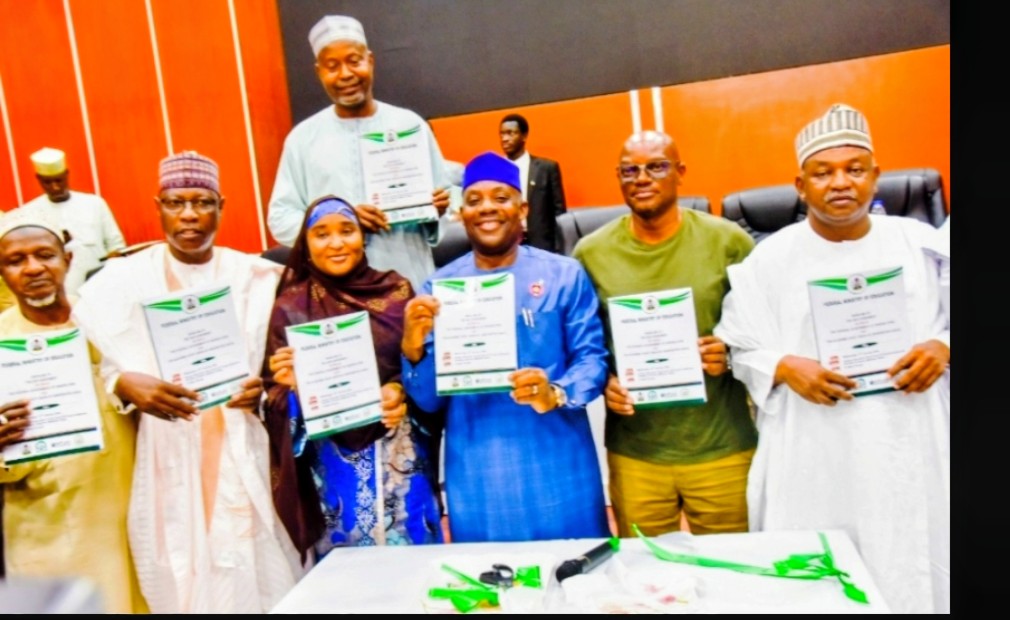
During a ceremony in Abuja yesterday, where the new agreement between the Federal Government and ASUU was presented, Minister of Education Dr. Tunji Alausa called it a historic milestone symbolizing renewed trust, confidence, and a commitment to maintaining continuous academic calendars in Nigerian universities.
NASU and SSANU warned, however, that delays in finalizing negotiations with non-teaching unions could cause unrest in the university sector.
In a statement issued yesterday in Abuja, JAC called the January 14, 2026, agreement a major step forward after lengthy and tough negotiations, emphasizing that dialogue remains the best way to resolve labor disputes in public universities.
They added that the progress made with ASUU would be meaningless if the Federal Government does not quickly conclude negotiations with NASU and SSANU, whose members provide essential administrative, technical, and support services across federal universities.
A statement by NASU General Secretary Peters Adeyemi and SSANU President and JAC Chairman Mohammed Ibrahim stressed: ‘Timely conclusion of the renegotiation with NASU and SSANU would avert a breakdown of industrial peace and harmony in the system.”
ASUU President Prof. Chris Piwuna expressed concerns about governance during the unveiling of the 2025 agreement in Abuja yesterday.
He warned that poor governance was undermining accountability, stability, and academic standards, with weak structures hindering proper resource use in some institutions.
Piwuna stated that although university autonomy is recognized and partly backed by law, its practical application remains weak, leading to ongoing external interference.
He pointed out that the dissolution of governing councils and interference in vice-chancellor appointments are recurring issues that undermine meritocracy and threaten institutional stability.
Piwuna also criticized promotion practices at newly established federal Universities of Education, alleging that due process and standards for professorial appointments are being bypassed.
During the event in Abuja, Piwuna shared some messages from Ahmed, saying he nearly abandoned the renegotiation process.
He told stakeholders at the packed TETFund Auditorium that the prolonged deadlock and high-pressure moments nearly derailed negotiations, but patience, perseverance, and the renewed commitment of all parties ultimately broke the impasse.
He praised the Federal Government for showing greater transparency and sincerity towards the end of the talks, noting that the agreement marks a shift toward a dialogue-based approach to resolving university conflicts.
He expressed hope that proper implementation of the deal would bring stability and restore confidence among lecturers and students alike.