
Niger State Government Collaborates with UNICEF to Empower Local Directors in Budgeting for Vulnerable Communities.
In a significant initiative to bolster social protection frameworks, the Niger State government has launched a training program aimed at equipping Directors of Planning, Research, and Statistics (DPRS) with the necessary skills to develop comprehensive and cost-effective budgets catering to the needs of economically disadvantaged communities.
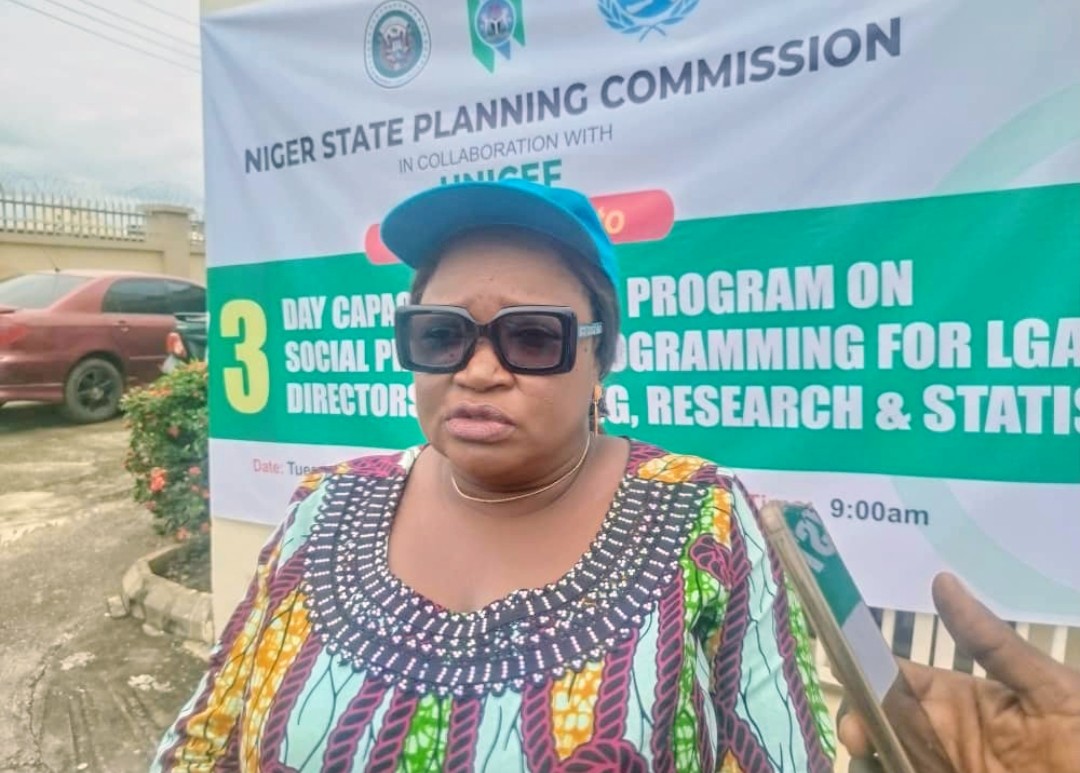
The three-day workshop, titled “Strengthening Capacity for LGA-DPRS,” is organized by the Niger State Planning Commission in partnership with UNICEF.
During the opening ceremony, Hajia Aisha Usman, the Permanent Secretary of the Commission, emphasized the workshop’s purpose: enhancing the DPRS’s capability to incorporate social protection priorities into local government development strategies.
“The effectiveness of social protection programs hinges on the incorporation of these priorities into planning, as well as ensuring that they are appropriately financed and monitored for impact,” Usman stated.
She highlighted that the training will enable participants to craft budgets that accurately reflect the needs of vulnerable populations and encourage resource mobilization beyond government funding.
In addition to budgeting skills, the workshop is designed to improve local government leaders’ abilities to coordinate and drive social protection initiatives effectively.
Wakidara Akila, a Social Policy Officer from UNICEF’s Kaduna Office, urged participants to integrate social protection considerations into their budgeting processes.
“Addressing poverty is critical, and immediate action is required to prevent its persistence. Linking social protection to budgets will foster accountability and ensure that resources are utilized efficiently, with the ambition of making Niger State one of the most developed regions in Nigeria,” Akila cautioned.
Dr. Grace Atim, a Gender and Social Safeguard Specialist from the Ministry of Foreign Affairs, reiterated the key role local governments play in executing social protection programs.
She advised participants to focus on identifying, costing, and prioritizing these initiatives within their budgets to maximize their impact.
This initiative marks a proactive step towards addressing the needs of vulnerable populations in Niger State and represents a collaborative effort to strengthen local governance and promote equitable development.