
Plateau’s Painful Historic Book on Plateau crises ,accuses Federal and State Govt of failure to punish perpetrators.
From Yakubu Busari
The Plateau conflict and the colonial, religious, ethnic differences triggered the challenges of insecurity, promoted by indigene, settlers diverse.
The incessant conflict bedeviling the people of Middle Belt zone of Nigeria was caused by ” , Leaders,lack of sincerity where security Chiefs, peace advocates admonished a landmark Book on conflict resolution
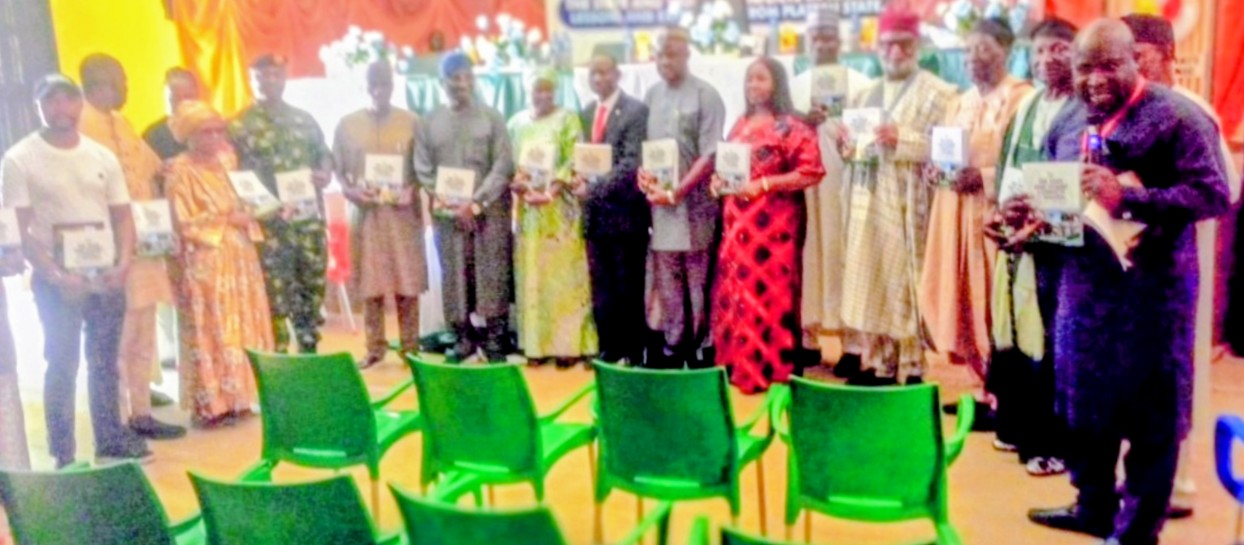
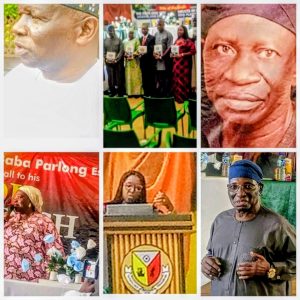
The official launch and unveiling of the book titled “The State and Violent Conflicts in Nigeria: Lessons and Experiences from Plateau State,” a publication many described as a historic contribution to peacebuilding, justice and national development.
The 400-page book, authored by a retired Permanent Secretary and security expert, Barrister Timothy Baba Parlong, quickly transformed into a profound reflection on Plateau State’s troubled, past, present and the future the consequences of prolonged violence, and the urgent need for unity and reconciliation among communities leaders .
The exposed the characters of the people of minority groups in middle belt states and problems associated with westerners religious in advancing hatred ,economic, administrative and political control by selfish individuals.
A Plateau State Commissioner for Higher Education ,Mrs Kachllom Gang described the publication as the product of enormous sacrifice, extensive research and intellectual commitment.
She therefore pledged to encourage tertiary institutions in Plateau State to acquire copies for their libraries, emphasizing that the lessons contained in the book would benefit students, researchers, policymakers and future leaders.
She further urged participants to support the author by purchasing copies, insisting that knowledge remains one of society’s strongest tools against ignorance and conflict.
The commissioner also used the occasion to call for greater unity among Plateau citizens, arguing that lasting peace can only be achieved through cooperation, mutual respect and collective responsibility.
She maintained that divisions based on religion and ethnicity have cost the state dearly and must be replaced with a renewed commitment to peaceful coexistence.
In his remarks as Chief Host, PIDAN President, Ambassador Nanpon Danjuma Sheni, described the author as a trusted friend and partner in the quest for peace.
He revealed that a recent engagement with Christian and Muslim youths exposed a troubling reality , many young people on the Plateau have lived their entire lives amid violence and conflict. Yet,
according to him, those same youths have now chosen dialogue over hatred and peace over retaliation.
Ambassador Sheni said the younger generation challenged elders to abandon narratives that promote division and instead embrace reconciliation and understanding.
He urged community leaders to adopt innovative approaches to conflict resolution, warning that repeating old methods would only perpetuate the cycle of violence. promised to facilitate wider community access to the publication.
Adding the voice of the military, representatives of the General Officer Commanding 3 Division and Commander of Operation Safe Haven noted that security personnel have often found themselves at the center of Plateau’s conflict management efforts.
The military delegation described the book as an important operational resource capable of helping officers understand the roots, patterns and complexities of conflicts in the state. pledged to recommend the book to officers posted to the Plateau theatre of operation.
From the peacebuilding community, renowned mediator Reverend Gideon Para-Mallam emphasized that genuine peace cannot exist where justice is absent.
He argued that many peace initiatives have failed because recommendations were either ignored or poorly implemented.
Expressing confidence in the book’s potential contribution to reconciliation efforts, and disclosed plans to make the publication compulsory reading within his organization.
The event gained further momentum when former Plateau State Governor, Ambassador Fidelis Tapgun, took participants through key moments in the state’s peace journey.
He praised the author for documenting realities many people would rather forget, describing the publication as a national resource that extends beyond Plateau State.
Tapgun particularly lamented the failure of successive authorities to implement recommendations from several commissions and committees established to address conflicts.
Drawing from his personal involvement in federal peace initiatives, he recalled extensive consultations involving community leaders, governors, traditional rulers and pastoral groups.
According to him, many agreements reached through dialogue were never implemented, thereby allowing grievances to persist and violence to resurface.
Reflecting on a recent meeting with President Bola Ahmed Tinubu, the former governor disclosed that young representatives from both Christian and Muslim communities expressed frustration that elders often undermine peace efforts.
He said the youths openly declared their determination to reject violence and build a future anchored on peaceful coexistence, regardless of religious or ethnic differences.
Speaking with journalists after the launch, former Secretary to the Plateau State Government, Professor Danladi Atu, described the book as a repository of knowledge, experience and institutional memory.
He said such publications are invaluable because they preserve lessons from the past and provide future generations with practical guidance on conflict prevention and peaceful living.
The author, Barrister Timothy Baba Parlong, explained that the devastating conflicts which erupted in Plateau State from 2001 inspired his decision to document the state’s experiences.
Having served in strategic positions during some of the most difficult periods in Plateau’s history, he said he felt compelled to preserve firsthand accounts for posterity.
According to Parlong, the book traces the evolution of conflicts from the colonial era through contemporary times, carefully examining the social, political and economic factors that contributed to recurring violence.
He noted that without proper documentation, societies risk repeating costly mistakes and losing valuable lessons that could guide future generations.
The retired Permanent Secretary further revealed plans to undertake additional research projects, including the compilation of a comprehensive publication on all ethnic groups in Plateau State.
He expressed optimism that such a project would strengthen unity, foster mutual understanding and reinforce the state’s collective identity.
In separate interviews, participants at the event also called for stronger community participation in security efforts and renewed discussions around state policing as part of broader strategies to tackle insecurity.
Many agreed that peace would remain elusive unless citizens, leaders and institutions work together to confront the root causes of violence.
As the ceremony drew to a close, one message resonated across the hall, Plateau’s painful history must neither be forgotten nor repeated.
Speakers unanimously agreed that justice, sincere dialogue, effective implementation of peace recommendations and unwavering unity remain the surest pathway to restoring the Plateau of old , a state once celebrated across Nigeria as a symbol of peace, hospitality and harmonious coexistence.