
F G Reinforces Commitment to Eye Health with Launch of SightQuest Nigeria Initiative
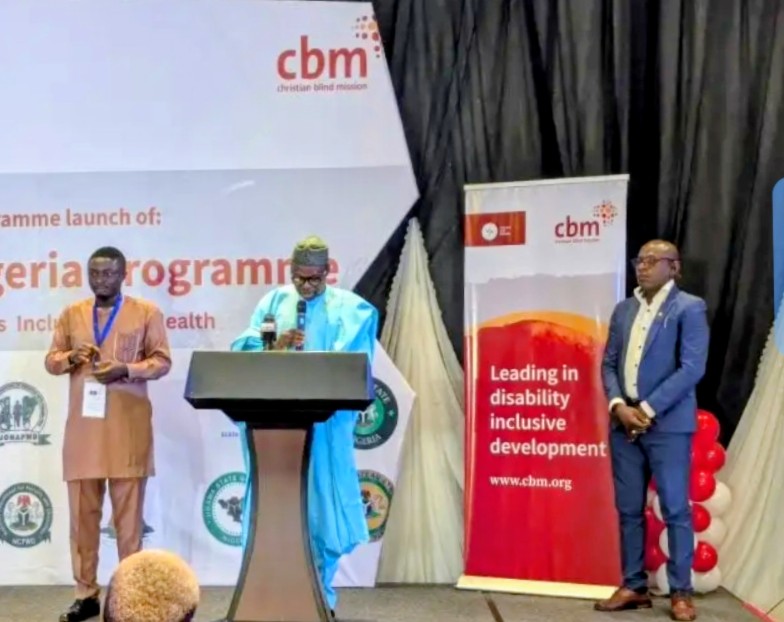
The Federal Government has reaffirmed its dedication to eliminating avoidable blindness through the launch of SightQuest Nigeria, a decade-long eye health program developed by Christian Blind Mission (CBM) International. This initiative aims to expand inclusive eye care services nationwide.
During the launch on Thursday, the Minister of State for Health and Social Welfare, Dr. Iziaq Adekunle Salako, announced that the program would initially operate in five states, with plans to expand to 14 states nationwide.
Salako highlighted that Nigeria’s blindness prevalence stands at 0.78 percent, with approximately 84 percent of cases caused by treatable or preventable conditions such as cataract, glaucoma, refractive errors, corneal opacities, trachoma, onchocerciasis, and emerging diseases like diabetic retinopathy.
He attributed the high prevalence largely to poor awareness and limited access to quality eye care, which often leads patients to seek unorthodox treatments with potentially disastrous outcomes.
“Vision impairment hampers individuals’ ability to perform daily activities, reduces productivity, and ultimately limits their contributions to national economic growth,” the minister stated.
He further noted that global estimates indicate vision loss costs the world—including Nigeria—about 411 billion dollars annually. Conversely, each dollar invested in cost-effective eye care interventions yields a return of 28 dollars.
Preventing vision loss, according to Salako, would improve educational opportunities, workplace productivity, quality of life, and life expectancy, thereby contributing to Nigeria’s gross domestic product.
The minister also referenced policy frameworks such as the National Eye Health Policy adopted in 2019 and the National Eye Health Strategic Development Plan for 2024–2028, both aligned with President Bola Ahmed Tinubu’s Renewed Hope Agenda and the goal of universal health coverage.
He highlighted the approval of the Effective Spectacle Coverage Initiative Nigeria, known as JigiBola 2.0, which aims to distribute 5 million free reading glasses over 4 years. Implementation of the program has already begun in 15 states and includes efforts to integrate primary eye care into primary healthcare. The government also aims to perform at least 25,000 free cataract surgeries by 2027.
Salako commended CBM International and its donors for their support, emphasizing that SightQuest Nigeria would assist government efforts to improve access to cataract surgery, enhance the availability of spectacles, strengthen eye health infrastructure, and develop human resource capacity.
He expressed confidence that the initiative will help Nigeria meet global targets for eye health and disability inclusion by 2030.
Reaffirming the government’s commitment, Salako emphasized ongoing efforts to improve healthcare access, quality, and financial protection through the Health Sector Renewal Investment Initiative.
He acknowledged international partners such as the World Health Organization and the World Bank for recognizing Nigeria’s progress in health reforms, while urging stakeholders to support full implementation to ensure affordable, accessible healthcare for all.