
Immunization: Niger Gains Korean and UNICEF Support to Reduce Zero-Dose Children in 8 Months
The Niger state government has announced plans to expand interventions across 10 local government areas (LGAs) identified as having a high prevalence of zero-dose children, aiming to increase immunization coverage within the next eight months.
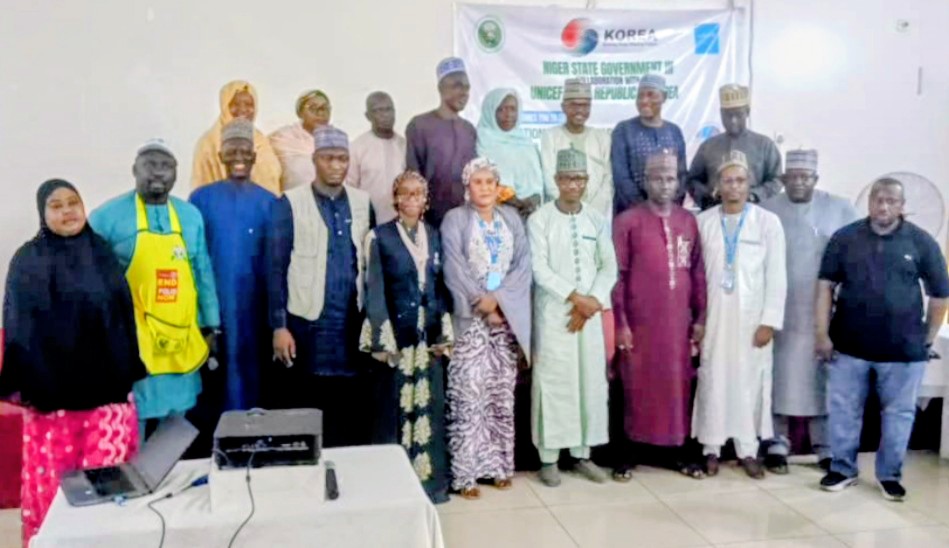
During the socialization meeting on the partnership between the Republic of Korea (ROK) and UNICEF, focused on strengthening immunization and essential health services in the prioritized LGAs, the Commissioner for Health, Dr. Murtala Bagana, highlighted security challenges and difficulties in reaching remote communities.
Represented by the Ministry’s Permanent Secretary, Dr. Abdullah Imam, the Commissioner expressed appreciation for the grant from UNICEF and the Republic of Korea.
He called on the LGAs of Bida, Chanchaga, Edati, Gurara, Katcha, Kontagora, Mariga, Rafi, Suleja, and Wushishi to take ownership of initiatives to improve routine immunization and outreach activities in both facilities and communities.
He emphasized, “As a state, we are doing everything possible to address insecurity. We all see its negative impact; everyone is concerned.”
“It is not enough to plan for zero-dose cases. We must strive so that no child remains unvaccinated, as every unvaccinated child is at risk, posing dangers to others.”
In his remarks, Dr. Inuwa Junaidu, Executive Director of the Niger State Primary Health Care Development Agency, outlined the challenges posed by banditry and insecurity, particularly in Zamfara, Kebbi, Kogi, and Kaduna states. “Our priority now is to act decisively,” he stated.
Dr. Junaidu also noted that a rapid assessment was conducted to identify LGAs contributing to the zero-dose burden. With support from the Korean government and UNICEF, efforts are underway to locate all zero-dose children and vaccinate them within eight months.
He added, “Our goal is to identify, register, vaccinate, and significantly reduce the zero-dose burden in Niger State.”
In a goodwill message, UNICEF representative Dr. Ahmed Tsofo from the Kaduna Field Office reaffirmed the importance of the existing partnership with the state. “UNICEF stands ready to support you fully to ensure the success of this initiative.”
He further stated, “Nigeria bears the highest number of zero-dose children worldwide, totaling 2.1 million, including those in Niger State and the ten LGAs. Six states—Adamawa, Bauchi, FCT, Lagos, Niger, and Ogun—are most affected.
“The persistent gaps in immunization coverage and recurrent outbreaks of vaccine-preventable diseases such as diphtheria, measles, and cholera underscore the need for this support. Insecurity continues to impede efforts to reach all children,” he concluded.