


African Democratic Congress Governorship Candidate Criticizes Niger State Assembly Over $14.4 Million Loan Approval
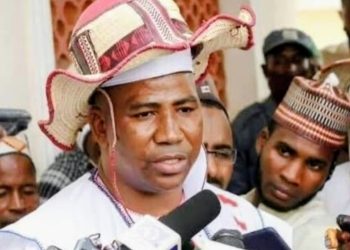
African Democratic Congress governorship Candidate in Niger State, Dr. MK Kpautagi, has criticized the Niger State House of Assembly for approving a reported $14.4 million loan for Niger Foods. He described the move as a betrayal of public trust.
Dr. Kpautagi in a radio programme “Crusader platform ” emphasized that the primary duty of legislators is to serve citizens’ interests through oversight, accountability, and prudent management of public funds—rather than rubber-stamping policies and financial decisions that increase the burden on the people.
He expressed concern that approving the loan at this time undermines the Assembly’s commitment to transparency, fiscal discipline, and citizens’ welfare, particularly as Niger State faces significant challenges.
“Where is the oversight?” he questioned. The ADC aspirant noted with disappointment that nearly three years into its tenure, the current Assembly has failed to demonstrate the independence and scrutiny expected of a legislature dedicated to protecting public interest.
He highlighted ongoing issues such as insecurity, poverty, unemployment, poor education, inadequate healthcare, and bad roads, pointing out that the House seems more focused on approving borrowings than addressing these critical problems.
“Citizens elected Assembly members to act as watchdogs, not bystanders. Their role is to ask tough questions, enforce accountability, and protect public resources. Unfortunately, what we are witnessing falls short of that mandate,” Dr. Kpautagi said.
Though acknowledging the importance of agriculture to the state’s economy, he stressed that any financial commitments of this magnitude must undergo rigorous scrutiny to ensure they genuinely benefit the people and do not exacerbate the state’s debt burden.
It could be recalled that during a session in Minna on Wednesday, Speaker Niger State House of Assembly. RT Hon Abdulmalik Sarkindaji has cleared the air on the $14.4million (#20.4billion) loan request by the state governor Umaru Mohammed Bago, saying that the letter from governor was only to seek the approval of the assembly for the state to guarantee the loan by Niger Food Security Systems and Logistics Company.
RT Hon Abdulmalik Sarkindaji explained that, contrary to misconceptions implying approval of a new loan, the request was specifically for the government to guarantee a loan obtained by Niger Food Security Systems and Logistics Company through UBA.
According to him the purpose of this guarantee is to enable financing from Saudi Exim Bank to support the expansion of operations, including the development of a 3,000-hectare irrigated farm estate in the state.
The Speaker highlighted the importance of this clarification, noting that recent reports misrepresented the nature of the request. He explained that during Tuesday’s plenary, the Assembly received a letter from Governor Bago requesting legislative approval for a bank guarantee with UBA to finance the company.
He stated, “We only received a request from the governor seeking approval to enable the government to act as a guarantor between Saudi Exim Bank and Niger Food Security Systems and Logistics Limited.” He reiterated that this was not a request for a new loan but a request for the Assembly’s approval to back a loan facility.
The request was for the Assembly to approve the guarantee, which has been referred to the appropriate committee for further review.
The Speaker emphasized that Niger Food Security Systems and Logistics is a separate corporate entity, even though the state is its largest shareholder. The company functions as a limited liability company with its own management.
He further clarified that the responsibility for repaying the loan lies solely with Niger Food Security Systems and Logistics. The state’s role is limited to providing a guarantee, due to its significant shareholding in the company.
The Speaker underscored that the guarantee arrangements comply with relevant legal provisions and that the government’s role is to serve as a guarantor for the facility. He added that the government remains open to applying for loans for developmental projects, which the Assembly would duly consider.
Finally, he noted that the Assembly keeps records of all financial facilities extended to the government and urged anyone seeking the state’s debt profile to consult the Debt Management Office.