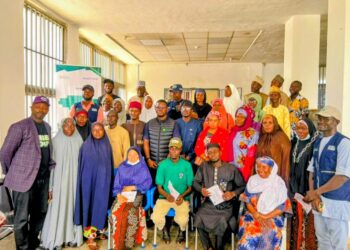


WHAT COMES NEXT AFTER THE EIGHT-DAY RETREAT IN NIGER STATE
After eight days of intense learning, reflection, and reorientation inside the Hauwa Isah Wali Hall at the Government House in Minna, a key question now sits at the heart of Niger State’s public service discussion: What’s next?
Indeed, the capacity-building retreat for designated commissioners, special advisers, permanent secretaries, and newly elected local government chairmen may have concluded, but what it triggered is just beginning.
The New Niger Vision, Governor Umaru Bago’s plan for a modern, accountable, and development-focused state, now expects its implementers to turn knowledge into action.
During the retreat, participants examined the realities of governance, its challenges, systemic gaps, and the discipline needed to run a government that centers on the people. They signed a social contract promising transparency, accountability, teamwork, and community involvement.
But beyond the signing and speeches, the real work is still ahead. The upcoming weeks will show how these leaders put their new knowledge into practice.
Will the permanent secretaries improve administrative discipline further?
How will the commissioners align their ministries with the strategic priorities defined during the retreat?
In what ways will local government chairpersons bring governance closer to the citizens in their LGAs?
How will advisers provide well-informed, forward-looking guidance to all stakeholders?
These questions, among others, are what thoughtful minds need to explore as the retreat concludes.
Because the retreat has been a mirror, reflecting where public officials currently stand and, more importantly, where they must go, progress will depend on taking practical steps to turn resolutions into actions.
The communique outlined numerous resolutions and recommendations, but their real value hinges on effective implementation. Immediate next steps include:
– Digitizing governance processes through ICT and e-procurement.
– Increasing internally generated revenue to lessen dependence on federal allocations.
– Empowering Information Units for instant, transparent reporting and public engagement.
– Establishing performance contracts and quarterly reporting systems through Performance & Delivery Units (PDUs).
– Reinforcing internal controls and oversight bodies to uphold accountability.
– Conducting baseline evaluations of ongoing projects to prevent duplication, waste, or unclear mandates.
– Activating whistle-blower protection mechanisms to promote ethical behavior.
These are not just ideals; they are essential components of an efficient, citizen-focused administration that Niger State aspires to establish.
If the retreat accomplished anything notable, it is the renewed sense of unity across leadership. For the first time in recent memory, commissioners, advisers, permanent secretaries, and local government leaders came together to confront shared questions:
– What future are we building?
– How do we get there together?
This shared understanding will serve as the foundation for the next phase of the New Niger Journey.
What comes after this eight-day retreat is clear: implementation, discipline, service, and results that citizens can see and feel.
The Ministry of Information and Strategy must take a central role here, ensuring that public trust deepens by translating policies into better service delivery, quicker community responses, cleaner governance processes, and development outcomes across every LGA.
MDAs and LGAs must, as a priority, adopt strategic communication policies to ensure the impact of this retreat is felt.
Though the retreat ends today, December 11, it truly marks the start of a more demanding journey. The real challenge lies in how these resolutions are applied within offices, communities, meetings, budgets, and daily decisions—and, most importantly, in how these decisions reach the people who are the key stakeholders.
For leaders who embraced the eight days of learning, the next phase is straightforward yet profound: turn commitments into governance, ideas into impact, and the New Niger Vision into a new Niger reality.
And that is what comes next.
Yunusa Abugi is the Director of Information in the Niger State Ministry of Information and Strategy.